
Las Ramblas: Golf Among The Ravines
Discover how a rugged landscape of natural ravines was transformed into one of the Costa Blanca’s most distinctive golf and residential communities.
Michal Wykowski
6/24/20264 min read
Las Ramblas: Golf Among The Ravines
Among the many residential areas that make up Orihuela Costa, Las Ramblas stands out for one reason above all others: its landscape.
While Villamartín was built on relatively gentle terrain and Las Colinas emerged within a secluded valley, Las Ramblas developed in a setting unlike any other in the region. Deep natural ravines, rolling hills, Mediterranean woodland, and dramatic elevation changes define both the golf course and the community that grew around it.
Today, Las Ramblas is recognised as one of the most scenic golf and residential areas on the Costa Blanca. Yet its story begins long before the first fairway was designed or the first villa was built.
Understanding the Name
To understand Las Ramblas, we must first understand its landscape.
In Spanish, a rambla is a natural watercourse or dry riverbed that remains empty for most of the year but can carry large volumes of water during periods of heavy rainfall.
Across southeastern Spain, ramblas have shaped the landscape for thousands of years, carving valleys, ravines, and natural corridors through otherwise dry terrain.
The area that would become Las Ramblas was characterised by exactly these features.
Long before development began, the landscape consisted of rugged hills intersected by natural ravines, creating one of the most dramatic inland environments in Orihuela Costa.
The name Las Ramblas reflects this defining geographical characteristic.
Before Golf Arrived
For much of its history, the area remained largely rural.
Like much of inland Orihuela Costa, the land was used primarily for agriculture and grazing. Almond trees, olive groves, and dryland farming dominated the landscape, while scattered farmhouses stood among the hills.
Unlike the coastline, which began attracting tourism during the 1960s and 1970s, the inland terrain remained relatively untouched.
Its steep slopes and uneven topography made large-scale development more challenging than in flatter areas closer to the sea.
Ironically, those same natural features would later become its greatest asset.
The Golf Revolution
The transformation of Las Ramblas began during the rapid growth of golf tourism on the Costa Blanca.
Following the success of Villamartín Golf, which opened in 1972, developers recognised that the region’s climate made it ideal for year-round golf.
As demand grew, attention turned to new locations capable of offering something different.
The rugged landscape of Las Ramblas presented both a challenge and an opportunity.
Rather than flattening the terrain, planners embraced its natural contours.
When Las Ramblas Golf opened in 1991, it immediately distinguished itself from other courses in the area. Designed by the renowned Spanish golf architect José “Pepe” Gancedo, often referred to as the “Picasso of Golf,” the course utilised the natural ravines, valleys, and elevation changes to create a layout that was both beautiful and demanding.
The result was a course unlike any other on the Costa Blanca.
A Golf Course Defined by Nature
Many golf courses are built on land that has been heavily reshaped by machinery.
Las Ramblas followed a different philosophy.
The course was designed to work with the landscape rather than against it.
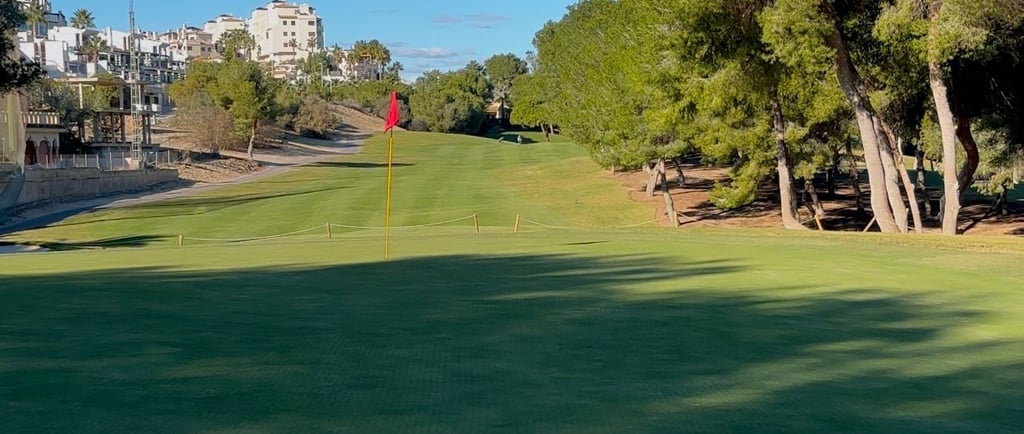
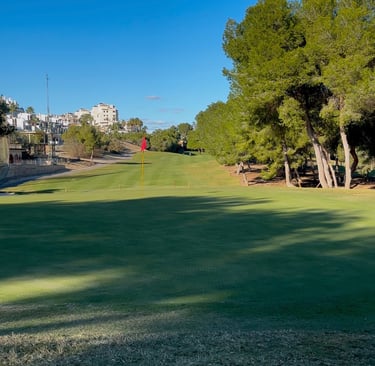
Fairways weave through pine forests and natural ravines. Elevated tees provide spectacular views of the surrounding countryside. The rugged terrain creates dramatic holes that challenge players both strategically and visually.
For golfers, Las Ramblas quickly earned a reputation as one of the most memorable courses in Spain.
It was not necessarily the easiest course to play, but it was certainly one of the most distinctive.
This unique identity helped establish Las Ramblas as an essential part of the growing golf destination that Orihuela Costa was becoming.
The Growth of a Residential Community
As happened previously in Villamartín, the golf course became the catalyst for residential development.
Properties began appearing around the fairways, attracting buyers who wanted to combine golf, nature, and Mediterranean living.
Unlike many coastal urbanisations, Las Ramblas appealed particularly to those seeking tranquillity and scenic surroundings.
Residents could enjoy:
Views across golf fairways and ravines
Proximity to nature
Easy access to nearby beaches
Close connections to Villamartín and Campoamor
A quieter residential atmosphere
Over time, Las Ramblas evolved into a well-established international community.
An International Lifestyle
From the 1990s onwards, buyers from across Europe discovered the area.
British, Belgian, Dutch, German, Scandinavian, and Irish residents were among the first to recognise its appeal.
Many initially arrived for golf holidays but later chose to purchase properties and spend extended periods in the region.
The area’s location proved particularly attractive.
Although surrounded by nature, residents remained only a short drive from:
Cabo Roig
Campoamor
La Zenia
Villamartín Plaza
Zenia Boulevard
This balance between peaceful surroundings and convenient access continues to define life in Las Ramblas today.
Las Ramblas Today
More than three decades after the golf course opened, Las Ramblas has matured into one of the most desirable residential areas in Orihuela Costa.
Its identity remains closely linked to the landscape that inspired its name.
While other communities may be known for beaches, shopping, or nightlife, Las Ramblas is best known for its natural beauty and unique topography.
The mature pine forests, dramatic ravines, and carefully integrated residential developments create an atmosphere that feels distinct from anywhere else in the region.
For many residents, this connection to nature is precisely what makes Las Ramblas special.
A Community Shaped by the Land
The story of Las Ramblas is ultimately a story about working with nature rather than overcoming it.
What began as a rugged landscape carved by seasonal watercourses evolved into one of the Costa Blanca’s most respected golf and residential communities.
The ravines that once made development difficult became the very feature that gave Las Ramblas its identity.
Today, golfers and residents alike continue to enjoy a community shaped not by the sea or a historic estate, but by the remarkable landscape itself.
In a region known for sunshine, beaches, and golf, Las Ramblas proves that sometimes the land tells the most interesting story.