
Dehesa de Campoamor
Discover how a historic coastal estate named after a famous Spanish poet evolved into one of the naturally beautiful communities on the Costa Blanca.
Michal Wykowski
6/22/20265 min read
Dehesa de Campoamor: Where History Meets Paradise
When exploring the different districts of Orihuela Costa, it quickly becomes clear that each area has its own story. Villamartín grew around golf. La Zenia developed through coastal tourism. Cabo Roig became known for its exclusive seaside living.
But Dehesa de Campoamor is different.
Its story begins long before the arrival of international tourism, modern urbanisations, or golf resorts. It is a story rooted in history, nature, and vision—a story that stretches back more than a century and continues to shape one of the most desirable places to live on the Costa Blanca today.
Among all the districts of Orihuela Costa, Dehesa de Campoamor perhaps has the deepest historical roots and the strongest connection to the landscape that first made this coastline so special.
The Meaning Behind the Name
To understand Campoamor, we must first understand its name.
The area takes its name from Ramón de Campoamor y Campoosorio (1817–1901), one of Spain’s most celebrated poets, philosophers, and politicians. During the nineteenth century, Campoamor became one of the most influential literary figures in Spain, known for his poetry, essays, and public service.
Although he was born in Asturias in northern Spain, his family established ties with this part of the Mediterranean coast through the acquisition of extensive land holdings.
These lands eventually became known as the Dehesa de Campoamor.
The word dehesa has a special meaning in Spanish history. It refers to a large rural estate, often consisting of forests, grazing land, and agricultural areas. Traditionally, dehesas were valued not only for their economic importance but also for their natural beauty and ecological significance.
Long before apartment complexes, marinas, and beach promenades appeared, Campoamor was precisely that—a vast coastal estate surrounded by pine forests, open countryside, and spectacular Mediterranean views.
An Untouched Corner of the Mediterranean
For much of its history, the Dehesa remained largely untouched.
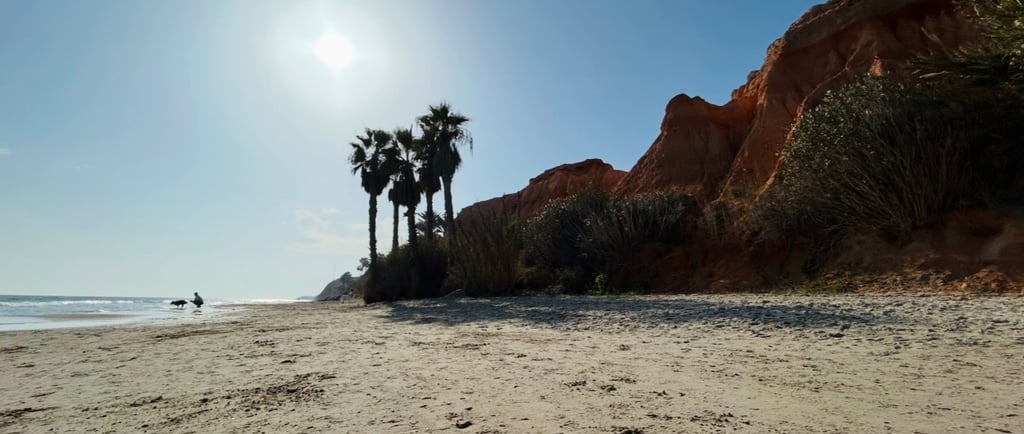
The coastline was characterised by rugged cliffs, hidden coves, and dense pine forests that stretched almost to the sea. Unlike many coastal settlements in Spain, there was no historic fishing village or urban centre here.
Instead, the area served primarily as private estate land.
Its relative isolation helped preserve the natural environment. While nearby communities focused on agriculture, Campoamor remained a place where nature dominated the landscape.
The combination of elevated terrain, sea views, and extensive woodland made it one of the most attractive yet undiscovered locations along the southern Costa Blanca.
A Vision Ahead of Its Time
Everything began to change during the 1950s and 1960s.
Spain was entering a new era. International tourism was starting to transform the country’s Mediterranean coastline, and investors were beginning to recognise the enormous potential of seaside living.
Many coastal developments that emerged during this period followed a simple formula: build quickly and maximise construction.
Campoamor followed a different path.
The descendants of Ramón de Campoamor recognised the unique qualities of the estate and envisioned a residential community that would preserve its natural character rather than replace it.
This was a remarkably progressive idea for its time.
The objective was not simply to create another tourist resort. The goal was to develop a residential environment that blended harmoniously with the landscape.
Wide avenues were designed to follow the natural contours of the terrain. Building density remained relatively low. Large plots were preserved. Most importantly, significant portions of the original pine forest were left intact.
More than half a century later, the success of that vision remains visible throughout Campoamor.
The Forest That Defines Campoamor
Ask long-term residents what makes Campoamor special, and many will give the same answer: the pine trees.
Unlike many coastal developments where greenery was added after construction, Campoamor was built within an existing natural forest.
The mature Mediterranean pines provide shade, beauty, and a unique atmosphere that immediately distinguishes the area from neighbouring urbanisations.
Walking through Campoamor today, it is easy to forget how close you are to busy tourist centres. The sound of birds often replaces traffic noise, while tree-lined streets create a feeling of space and tranquillity.
The forest also contributes to a healthier microclimate. During the summer months, temperatures beneath the trees can feel noticeably cooler than in more densely developed areas.
This natural environment is one of the reasons Campoamor is often regarded as the greenest district of Orihuela Costa.
Beaches, Sea, and a New Lifestyle
As development progressed, Campoamor’s coastline became one of its greatest attractions.
The area offers some of the most beautiful beaches in Orihuela Costa, including Playa de la Glea, Aguamarina, and Playa Barranco Rubio.
Protected by natural coves and framed by clear Mediterranean waters, these beaches helped establish Campoamor as a premium residential destination rather than simply a seasonal holiday resort.
Residents enjoyed something that was becoming increasingly rare along the Spanish coast: direct access to nature combined with modern comforts.
The development of the marina and yacht club further enhanced Campoamor’s reputation.
For sailing enthusiasts and boating owners, the marina provided an additional dimension to the Mediterranean lifestyle. It also reinforced Campoamor’s image as one of the most prestigious coastal addresses in southern Alicante Province.
An International Community Emerges
Beginning in the 1970s, buyers from across Europe started discovering Campoamor.
Families from the United Kingdom, Germany, Belgium, the Netherlands, Scandinavia, and Ireland were attracted by its climate, beaches, and quality of life.
Unlike many visitors who arrived simply for holidays, a significant number chose to stay permanently.
This gradual influx of international residents helped shape the multicultural character that defines Campoamor today.
Despite its international appeal, the area has retained a distinctive sense of identity. The original planning principles, respect for nature, and low-density development continue to influence the character of the community.
Campoamor Today
Today, Dehesa de Campoamor is widely regarded as one of the most desirable residential areas on the Costa Blanca.
Its appeal extends far beyond real estate.
Residents enjoy a unique combination of factors that are increasingly difficult to find in modern coastal developments:
Mature pine forests
Beautiful beaches
Scenic coastal promenades
A marina and yacht club
Spacious residential areas
Year-round international community
Easy access to golf courses, restaurants, and services
Most importantly, Campoamor has managed to grow without losing the qualities that made it special in the first place.
More Than a Residential Area
The story of Dehesa de Campoamor is not simply the story of a successful property development.
It is the story of how a historic estate evolved into a thriving coastal community while preserving its connection to nature.
It is the story of a landscape that shaped development rather than being consumed by it.
And it is the story of a vision that began with a family estate and continues today in the shaded streets, pine forests, beaches, and homes that define Campoamor.
While many places along the Costa Blanca were built around tourism or commerce, Campoamor was built around something far more enduring: the belief that people could live alongside nature without sacrificing comfort or quality of life.
Perhaps that is why, more than sixty years after its transformation began, Dehesa de Campoamor remains one of the true jewels of Orihuela Costa—a place where history, nature, and Mediterranean living continue to meet.